ChatGPT text in the US is not watermarked, per OpenAI's announcement as TechRadar quotes it. OpenAI said on Oct. 5 that "over the coming weeks, we will add an invisible watermark to eligible ChatGPT and Codex text output in the European Union." Anthropic said on Aug. 14 its watermark for future Claude models applies globally.
Is my ChatGPT text watermarked?
Not if you are outside the EU, for now, according to TechRadar's Graham Barlow, who reports that US and UK users are not affected. As of Oct. 15, OpenAI's technical report does not define "eligible," and TechRadar's quotation of the announcement gives no date beyond "the coming weeks."
BleepingComputer adds, quoting OpenAI's Oct. 5 post, that API developers worldwide can opt in to watermarking for supported models, and that it stays off by default.
ITdaily quotes OpenAI saying the watermark will roll out over the coming weeks to eligible ChatGPT and Codex users on all plans in the EU.
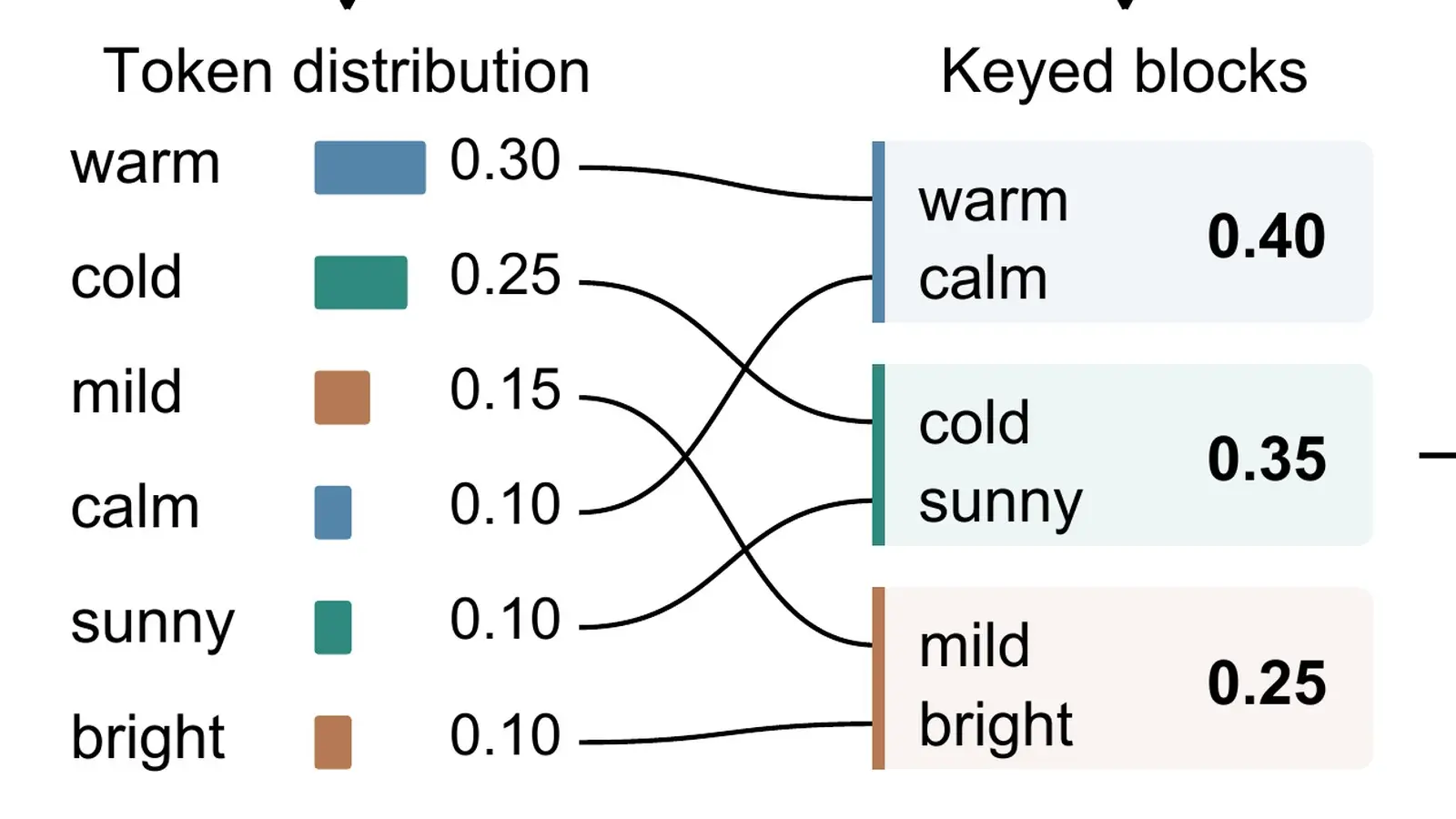
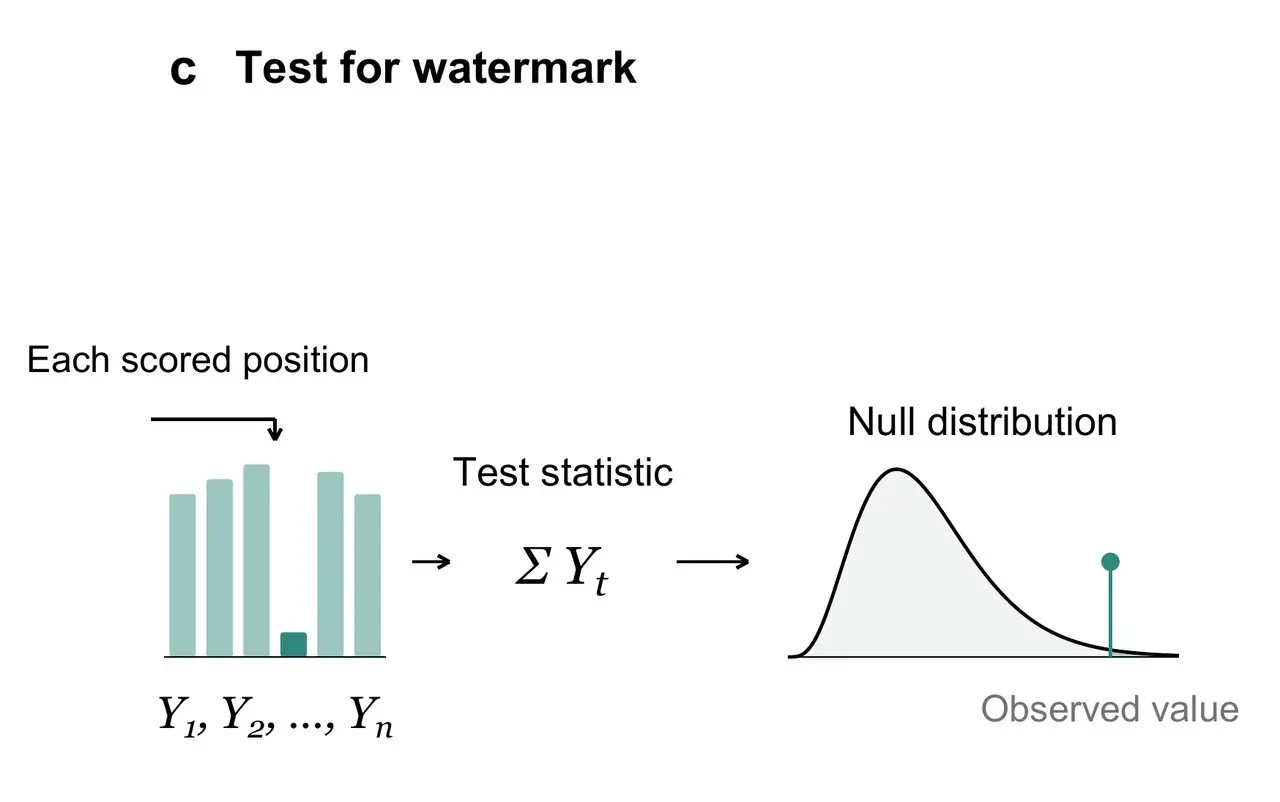
Per TechRadar's quotation of an OpenAI note, its method, textGrain, "adds an invisible statistical signal to the model's word choices." OpenAI's report says the detector needs only the text and a secret key, so nothing about a watermark is visible on the page.
Which assistants mark their text?
| Assistant | What the maker says | Where |
|---|---|---|
| ChatGPT and Codex | Invisible textGrain watermark coming "over the coming weeks" | EU only, per the announcement as TechRadar quotes it |
| Claude | Watermark on future Claude models; models launched before Aug. 2 get it "over the coming months" | Global at launch, per Anthropic (Aug. 14, updated Sep. 1) |
| Gemini | SynthID extended to text from the Gemini app and web experience | Region not stated on Google's SynthID page as of Oct. 15 |
| Copilot | Not stated | Microsoft's EU AI Act page, as of Oct. 15, says it is implementing generative AI disclosures but names no text watermark |
TechRadar says Claude already watermarks globally. Anthropic's page says "future Claude models" will carry the mark, and that it applies globally at launch because there is no durable way to limit it by region. It says models launched before Aug. 2 receive it "over the coming months," so the rollout is ongoing.
Anthropic says its method is a version of Google DeepMind's SynthID-Text, and that translations Claude writes are marked too. Google's SynthID page says it has "expanded SynthID to watermarking and identifying text generated by the Gemini app and web experience."
Why now
The trigger is the EU's AI Act. Article 50(2) says providers of systems that generate text must mark outputs "in a machine-readable format" so they are detectable as artificially generated, as far as that is technically feasible. It exempts tools that only assist with standard editing.
The Act's timeline lists Aug. 2, 2026 as the start date, with Dec. 2, 2026 for systems already on the market. Anthropic says it signed the EU's Code of Practice on Transparency of AI-Generated Content in July, and describes the watermark as its way of complying.
Can a teacher or employer check it?
Not with a public tool, according to TechRadar, which reports that OpenAI is giving its detector to approved researchers and expert organizations. It quotes the company: "Given the risk of missed watermarks and false positives, we are not making it publicly available at launch."
Anthropic has a Claude detection API in private preview for eligible organizations. It names regulators, law enforcement, media, fact-checkers, researchers, educational organizations and EU civil society groups.
Google's SynthID page describes checkers for image, video and audio files. As of Oct. 15, that page describes no text checker.
A result is a probability. Anthropic says a check only estimates how likely it is that Claude was involved, cannot show text is human-written, and cannot tell "Claude wrote this" from "Claude heavily edited this." TechRadar quotes OpenAI saying its tool reports whether a watermark is detected "without identifying the user or revealing their prompts."
Third-party "AI detectors" are a different thing. They do not hold a maker's key, and Anthropic says they look at phrasing patterns instead. A 2023 academic study found several widely used detectors consistently misclassified non-native English writing as AI-generated, and cautioned against using them in educational settings.
Does it change the quality of the answers?
OpenAI says, in its report, that its watermark is designed so that, averaged over secret keys, the model's original word probabilities are recovered, with an "entropy budget" capping the sampling randomness given up.
The same report adds that this average does not guarantee the same loss for every key. In the report as read on Oct. 15, there are no reader ratings or quality tests.
BleepingComputer reports OpenAI saying watermarking does not meaningfully affect the quality of GPT-6 Astra, with benchmark results broadly similar when textGrain is on.
Anthropic says internal testing showed no effect on content, creativity or readability, and points to a Google DeepMind test in which Gemini users' thumbs ratings showed no statistically significant difference. Google says SynthID "doesn't affect the quality of the output."
TechRadar's Barlow takes a different view in an opinion piece. He writes that he is "not saying that the resulting text will automatically be worse because of the watermark, but it certainly won't be optimal," and calls the move a box-ticking exercise for the EU rule.
Does editing change anything?
Yes, according to the makers. OpenAI says, as TechRadar quotes it, that "shorter or more constrained text is harder to detect" and that "editing can weaken the watermark." Its report says editing can weaken the statistical evidence.
BleepingComputer reports OpenAI saying that rewording can weaken text watermarks.
BleepingComputer also quotes OpenAI: "The absence of a detected watermark does not prove human authorship."
Anthropic says light editing probably will not remove its watermark completely, and that heavier editing weakens detection. It adds that small samples work poorly, that code and factual passages carry less, and that a proofread of human text may leave too little to detect.
OpenAI's report and TechRadar's article, as read on Oct. 15, do not say how OpenAI decides which accounts are in the EU, so what travel or a VPN would change is unknown.
Why it matters
Our assessment: a watermark can raise a probability, not settle who wrote a page. Anthropic says a check cannot separate writing from heavy editing, and TechRadar reports OpenAI limits its detector to approved organizations, as Anthropic does. A teacher or employer has no public test from either, so a suspicion needs other evidence.
What the sources leave open
OpenAI's report and TechRadar's article, as read on Oct. 15, do not say when the EU rollout finishes.
As of Oct. 15, Anthropic's page does not name the Claude models that carry the mark today. Google's page, as of Oct. 15, states no region for Gemini's text watermark, and Microsoft's page names no Copilot text watermark.