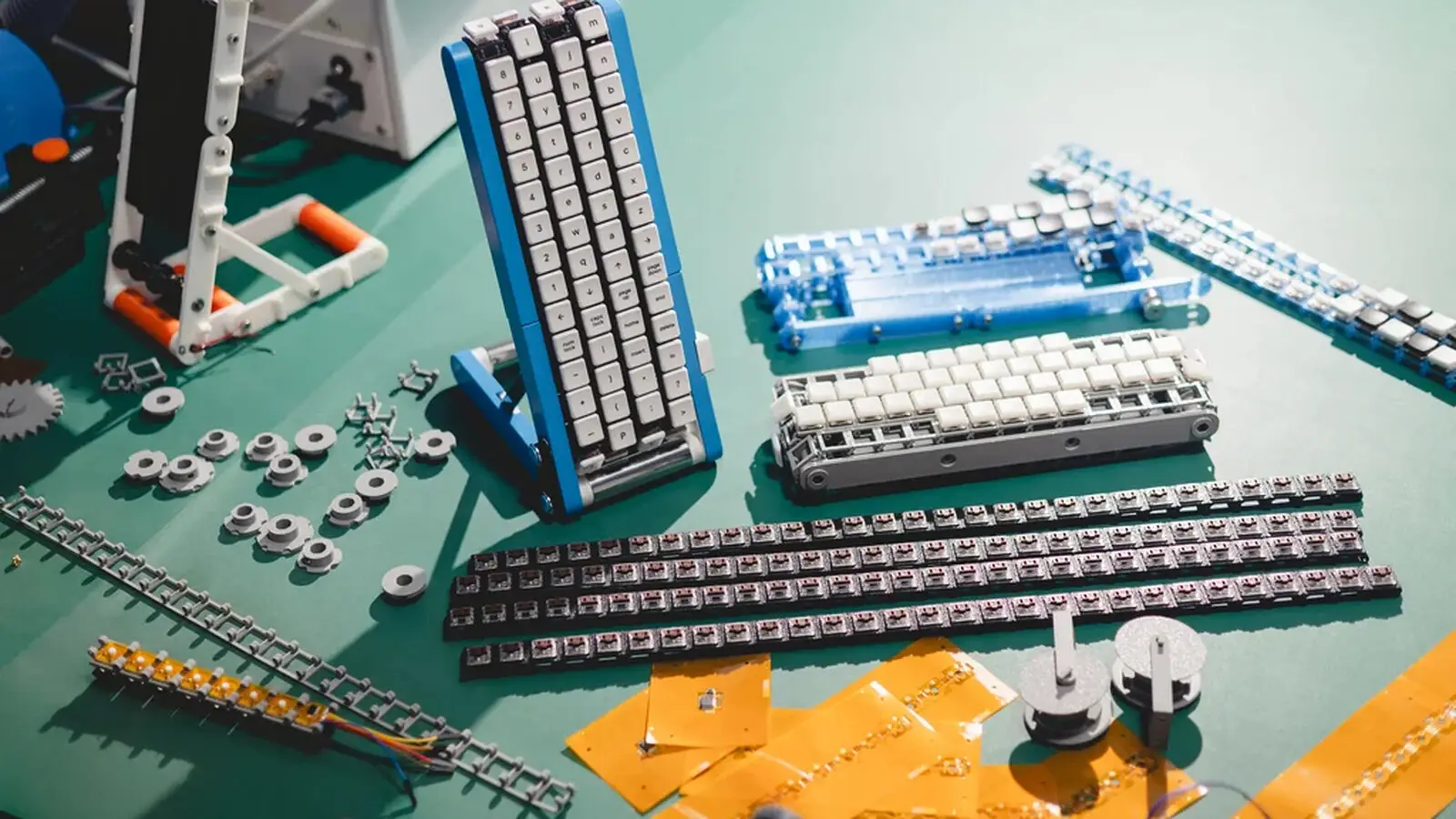
Google has released the design data, firmware and 3D-printable files for the Gboard Conveyor Belt Version, a keyboard whose keys ride a belt to your fingertips. Google's README says: "The Gboard Conveyor Belt Version is not an official Google product."
What it is
It is the latest in an annual Google Japan tradition to draw attention to Gboard, the Android keyboard app. Engadget reports it began with a drumset keyboard on April Fools 2010 and moved to October 1 releases in 2016; this one arrived October 1, 2026.
Hackaday describes four staggered rows of keys, each a 3D-printed chain of mechanical key switches driven by a motor in the base, with a flexible PCB per row. Android Authority counts 29 keys per belt, and the build guide's parts list totals 116 switches. Google's blog, as cited by Engadget, says it is for one-handed use and reduces fatigue as keys arrive under your fingertips.
Can you build one?
You cannot buy it: Android Authority says Google "isn't planning to actually sell this thing." The repository lists KiCad schematics and PCB layouts, firmware source, STL files and a build guide, and the repository carries an Apache 2.0 license.
We read the build guide. It documents only the motorized "Moving Keys Edition." The parts list calls for 157 printed pieces, 116 Kailh Choc V1 switches and keycaps, an ATOMS3 Lite controller and a DC6V N20 gear motor. The board documentation and a "functional Bluetooth keyboard" edition are both marked "Coming soon." Hackaday reports that how key presses reach a computer was marked "TBD" and the source code appears incomplete.
Why it matters
Google has published the files, so a builder could print and assemble the mechanism. The part that would make it a working computer keyboard is not documented yet.
What we could not confirm
We did not build it or run the firmware, and the one-handed-use and fatigue claims are Google's, not measurements.