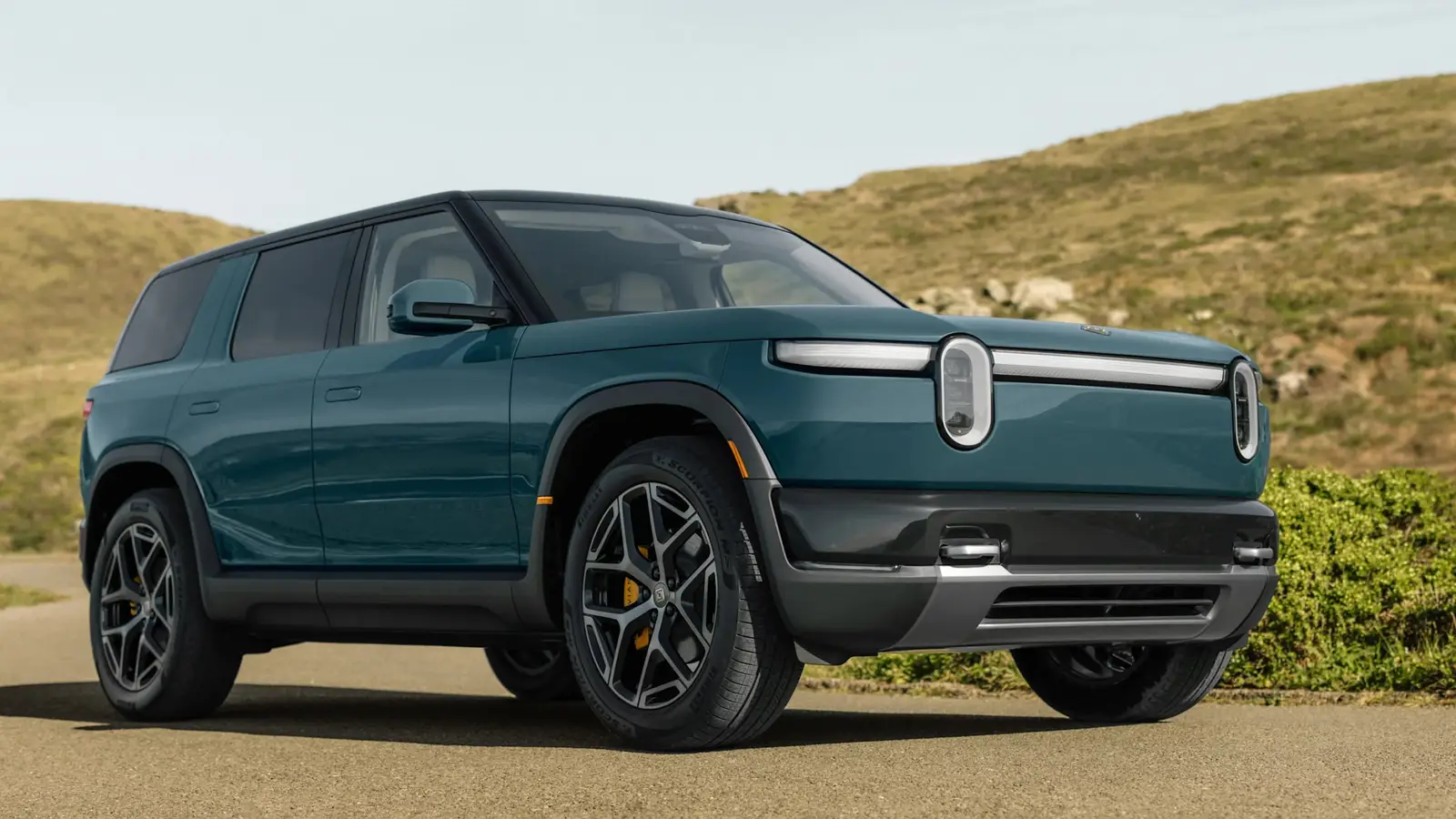
Rivian has acquired Third Dimension, a UK startup whose AI turns real-world images and video into 3D driving scenes, Rivian said Thursday. The Third Dimension acquisition is aimed at simulation for Rivian's driver-assistance and self-driving systems. Financial terms are not being disclosed.
What Rivian bought
Third Dimension was founded in 2024 by Tolga Kart and Piotr Sokolski, per Rivian's release. Its platform turns real-world data into controllable 3D environments, and lets engineers recreate driving scenarios and vary them at scale.
Its leadership and technical staff join Rivian's autonomy research and engineering teams. TechCrunch reported a team of about 15, mostly in the UK, working under autonomy and AI head James Philbin, with Rivian's London AI hub expanding. The same report adds a $7 million seed round from Abstract Ventures, MVP, Soma Capital and Solari Capital.
Why simulators built from real data matter
Rare situations are hard to train for: you cannot wait for them to happen on the road. Rivian says the platform lets its models "simulate complex driving conditions without waiting for rare real-world edge cases to occur."
Philbin said in the release that simulation is central to how Rivian trains and validates its autonomous systems. The idea is to start from real scenes, then change the conditions and see how the software responds.
The real data is the point. In that same report, Philbin said Rivian's customer fleet uploads more than 400,000 sequences a day, from owners who opt in to external camera sharing. Rivian's release says the work serves both its consumer and robotaxi roadmaps. According to that report, Rivian plans to supply Uber with a robotaxi system, and the simulation work supports that too.
Kart said in the release that joining Rivian lets the company "deploy our simulation technology at scale."
What it means for R2 owners
For now, the announcement does not describe any change to R2 features or software.
Not stated: a price for the deal, a timeline for when the work shows up in cars, or which driver-assistance features it would affect. Rivian's release also says plans for integrating the technology are forward-looking and uncertain.
Other automakers are pushing on the same layer. See GM's OnStar AI assistant and its 2028 autonomy plan and the robotaxi line in Tesla's Q3 results.