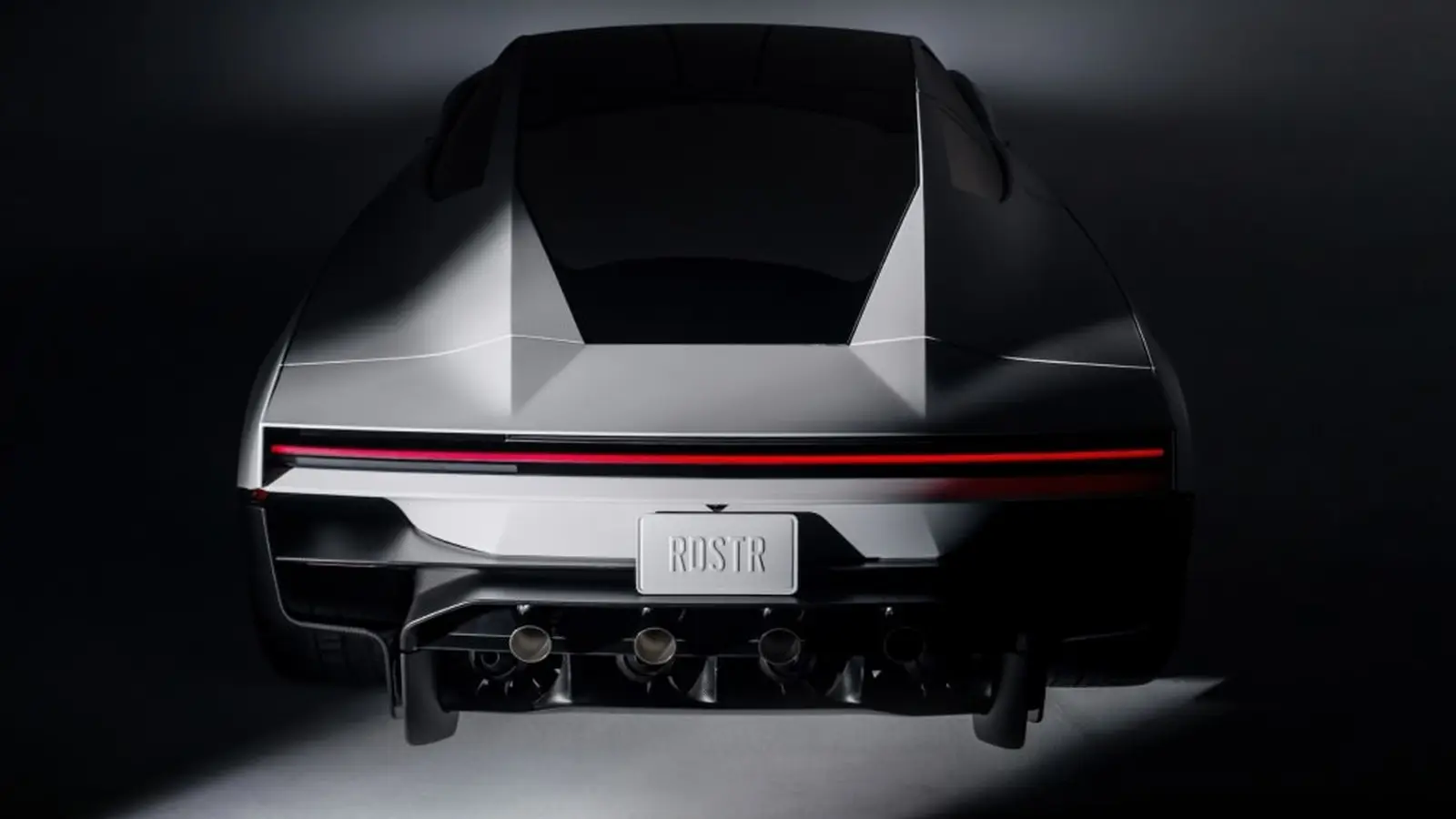
The Verge reports that Tesla demonstrated its next-generation Roadster at an event in Waco, Texas, where the car drove upside down, briefly flew and reached 60 mph in under a second. The Verge adds that the car will not go into production until 2028.
Tesla's Roadster page lists three versions. Performance is by reservation, with two seats, active aero and suction. Thrust is a limited release with two seats and rear cold-gas thrusters. Rocket is invite only, with one seat and thrusters around the perimeter; the page says, "So yes, it can fly."
The flying and upside-down driving shown on stage are Rocket features. A footnote on Tesla's page says they come with the Rocket trim only, which is not available in all regions, and the page marks Rocket "Not approved for public road use." As listed, that is not a car you can drive on public roads.
What Tesla showed
TechCrunch reports that the demo used fans and thrusters to drive the car up an inverted ramp, spin it and set it down, and to lift it over a Cybercab, Cybertruck, Tesla Semi, Model Y and Model 3. Engadget's live blog says a suction system held the car to the ramp and an Optimus robot sat in the driver's seat.
Engadget says the car appeared to be programmed for the stunts and that Musk said it is "not necessarily a safety-optimized car." TechCrunch says engineering VP Lars Moravy described 10 thrusters fed by 600 liters of compressed air that can be recharged.
Claimed performance
Tesla's page ties the under-one-second 0-60 mph claim to the Thrust version and says its listed specs reflect the Thrust augment, an optional upgrade.
Engadget's live blog says the 0-60 mph run was clocked at 0.81 seconds and that Musk said Tesla expects to do better. The same blog says no one appeared to time the earlier demo. TechCrunch says Tesla showed 0-60 mph in one second, and The Verge says under a second.
Engadget says a crowd member asked about top speed and Musk answered that it can go "much faster" than 235 mph. That is a spoken claim.
TechCrunch reports that all three trims will have 300 miles of range and be capable of going faster than 230 mph. As of Oct. 15, none of the three outlets reports a battery figure for this car.
Price, reservations and delivery
TechCrunch reports that Musk named no price, and Engadget's live blog says the same. Both say production is planned for 2028, and TechCrunch says Musk first promised thrusters in 2018.
Engadget's live blog says the $50,000 reservations apply to Performance, Thrust takes a $250,000 downpayment and Rocket is by invitation only.
The 2017 promise
The Verge says the 2017 prototype was promised at 0-60 mph in 1.9 seconds, with a 200 kWh battery, up to 620 miles of range and a $200,000 starting price, with deliveries from 2020. Engadget's live blog puts the 2017 starting price at $250,000 instead. The outlets disagree, and neither figure is a 2026 price.
TechCrunch says the reveal slipped repeatedly, including an attempt on Oct. 1 that severe weather delayed, and that some early customers paid $250,000 for a Founders Series reservation.
Why it matters
Our assessment: price is the open question. TechCrunch reports 300 miles of range for all three trims, against the 620 miles promised for the 2017 car, and Engadget reports no price for this version. Reservations span three versions, one by invitation only, so deposit holders cannot yet compare cost with what they paid.