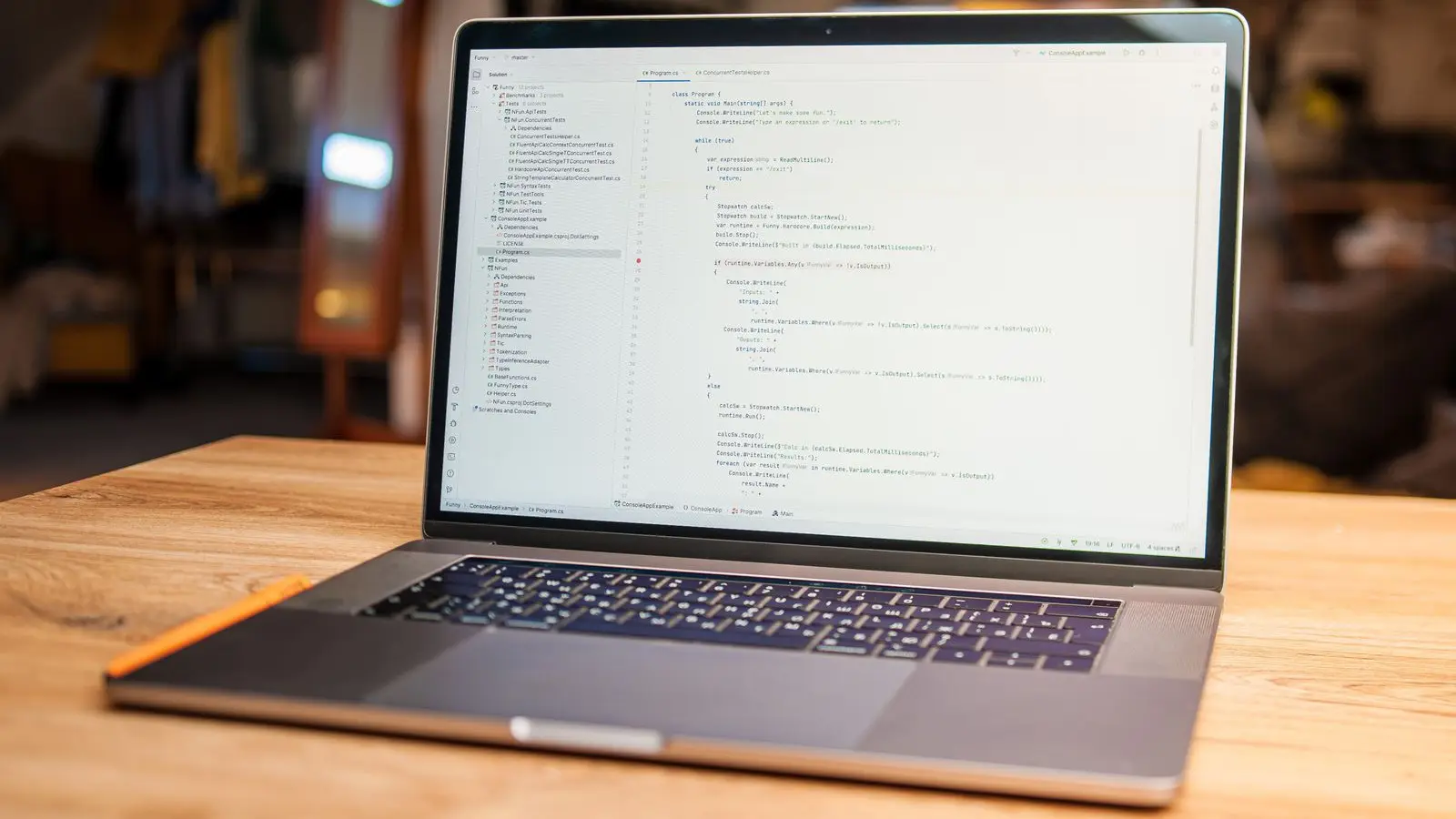
Recursive has released Flint, a coding model whose weights anyone can download from Hugging Face under the Apache 2.0 license. In its launch post, announced October 21, Recursive says it runs at 125+ tokens per second on an M4 Pro MacBook Pro at short contexts.
What it is
Flint is a mixture-of-experts model. That means only part of it works on each word it writes: 2.5B of its 40B parameters are active per token, Recursive says. The design is how a model this large can run quickly on one machine.
Recursive says it built Flint in under four months with an automated research system it calls the Eureka Machine.
What it runs on
Recursive says Flint works with llama.cpp, Ollama, Unsloth, LM Studio, vLLM and SGLang. It also offers its own "rec" engine for the M4 Pro and the M5 Pro and Max.
- Mac: Recursive says 125+ tokens per second on an M4 Pro MacBook Pro at short contexts.
- NVIDIA: Recursive says 150+ tokens per second on a 64GB RTX Spark at short contexts.
- Context: up to 512k tokens, though Recursive recommends staying within 256k.
Recursive says its NVFP4 build scores within 0.7 points of the full 16-bit model. NVFP4 is a smaller number format, so that build is lighter to run.
How it scores
Recursive says Flint leads mixture-of-experts models under 50B parameters on SWE-Bench Pro v2, Terminal-Bench 2.1 and SWE-Bench Verified. These are the company's own comparisons, and the post makes no claim against larger closed models.
Recursive itself says Flint may need more guidance than larger closed models. In practice, expect to give it clearer instructions and smaller steps.
Why it matters
A free model you can run offline keeps your code on your own computer, and you pay for no subscription or per-token fees. The trade-off is that you manage the setup yourself, and the speed figures above come from Recursive's tests on specific machines.
Other open models are pushing the same way. Meta's Muse Spark Open needs a cluster, as our Mac Studio story explains, while Flint targets a single laptop. If you want more desktop power, see Apple's Mac Studio with M5 Max. For a different approach to fast models, read about Inception's Mercury 3.