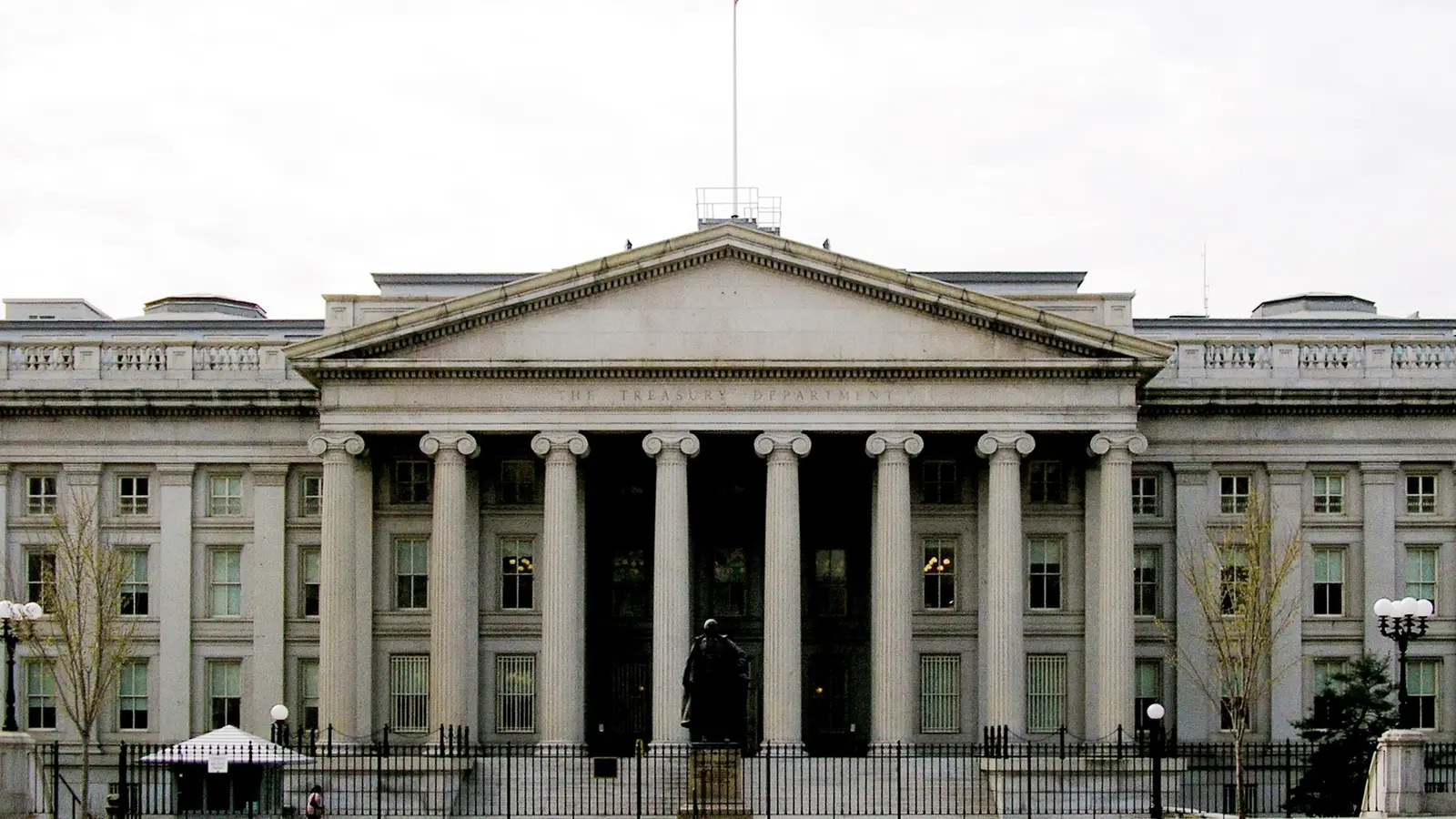
Treasury has proposed a rule that would bar US investors from backing companies in China and other countries of concern that develop any "super intelligence" system, the term an executive order now requires agencies to use for AI in certain documents. Deals worth $50,000 or less over 12 months would skip the notification requirement. Treasury issued the proposal on Oct. 22, and comments are open until Dec. 7, 2026. It is a proposal, not yet in force.
What changes for AI
The proposal implements the Comprehensive Outbound Investment National Security (COINS) Act, passed with the fiscal 2026 defense bill. Under today's rules, some AI deals only had to be reported. Treasury's fact sheet says the new rule would expand the prohibition to country-of-concern entities that develop any AI system, which "would eliminate the existing notification requirement for these transactions."
The wording follows Executive Order 14434 of Sept. 29, 2026, which requires agencies to say "Super Intelligence" in place of "Artificial Intelligence" in certain documents. The proposal uses "SI systems" where the current rules say "AI systems."
Which countries
The Act and the proposal define a country of concern as China (including Hong Kong and Macau), Cuba, Iran, North Korea, Russia, and Venezuela under the regime of Nicolás Maduro Moros. Treasury says that regime no longer exists, so Venezuela does not meet the definition, though it tells investors to check carefully because the rule can reach some investments outside a country of concern.
The existing program covered China only. A covered foreign person includes a citizen or permanent resident of those countries, companies organized or based there, their governments, and entities they majority-own or control.
Chips, quantum and the rest
Treasury's fact sheet lists these changes to the technology areas:
- Semiconductors. The existing prohibition stays and expands to radiation-hardened chips, photonic chips, high-bandwidth memory and more categories of advanced chips. Any other chip activity stays notifiable.
- Quantum. The ban now also covers developing algorithms or applications for quantum computing.
- Supercomputing. The ban on supercomputers stays, extends to the added chip categories, and adds a notification requirement for high-bandwidth, low-latency interconnects.
- Hypersonics. New ban on hypersonic systems, propulsion, testing facilities and related materials; sensors, controls and software are notifiable.
- Biotechnology. New ban covering brain-computer interfaces, biomanufacturing equipment, bioinformatics tools and similar areas.
What is exempt
Covered deals include equity stakes, joint ventures, greenfield investments, certain convertible debt and some limited-partner stakes in foreign funds. The proposal excepts:
- Publicly traded securities, and index, mutual and exchange-traded funds.
- Limited-partner stakes in non-US funds where committed capital is no more than $2 million, or a binding contractual assurance applies.
- Derivatives of those holdings.
- Deals totaling $50,000 or less over the preceding 12 months. This exempts only from notification; prohibited deals are not excused.
- Equity or options received as employment pay, bank lending, payment processing and underwriting.
Some exceptions do not apply where an investor gets governance rights beyond standard minority protections.
Duties and penalties
Notifications would be due within 30 days after a deal closes, or after the investor learns it was covered. Investors would be held to a knowledge standard that includes what they could have learned through "reasonable and diligent inquiry."
There is no screening process and Treasury does not plan a list of covered foreign persons at this time. The US investor must decide whether a deal is prohibited, notifiable or outside the rule. It can ask Treasury for non-binding feedback or a national interest exemption. Penalties run up to the maximum under the International Emergency Economic Powers Act, and Treasury can compel divestment of a prohibited deal.
Treasury also says the rule would not bar all investment in countries of concern, only discrete categories tied to specific technologies.
What happens next
Anyone can comment through regulations.gov until Dec. 7, 2026. A final rule will set the effective date. Until then, the existing rules at 31 CFR Part 850 apply.
Treasury Secretary Scott Bessent said the department is committed to "putting America's national security first." Assistant Secretary Christopher Pilkerton said the rules address risks when foreign adversaries try to benefit from US investment. For related coverage, see reports that OpenAI eased its push for strict chip export limits and Chinese firms' Nvidia GPU purchases. Those are about chips and export controls; this proposal covers where US money can go.