Google DeepMind launched Genie 4 on Oct. 27, adding generated sound and responsive character dialogue to worlds users can navigate and change in real time. The research preview is reaching trusted testers first; broader access is still ahead, with Google's waitlist open now.
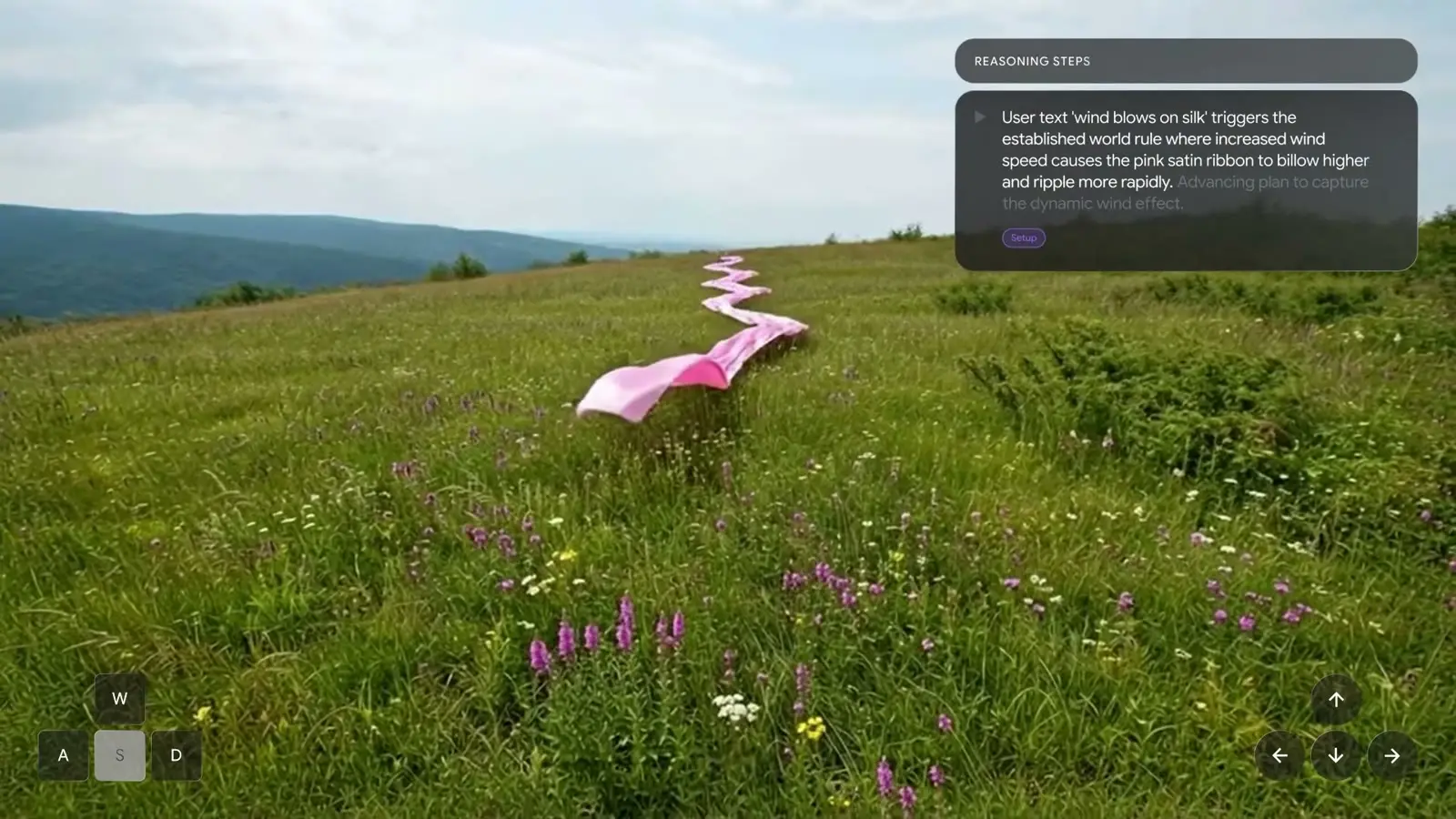
A world model generates what happens as you move and act, rather than playing back a fixed clip. In Google's demonstrations, keyboard controls move through a scene, while text prompts alter its weather, camera or characters. Sound changes with the simulation, including ambient noise, music and speech.
How to use Google Genie
- Now: trusted testers in a research preview.
- Next: Google Project Genie will bring Genie 4 to Google AI Ultra subscribers. Early-access partners will also get it through the Gemini API and Google AI Studio.
- Applying: Google's Genie 4 waitlist is open. The announcement gives no broader-release date or usage allowance.
How much does Genie cost?
Google has not announced Genie 4 API pricing or a standalone price. Its planned consumer access is tied to Google AI Ultra; subscribing does not guarantee immediate preview access. Our guide to Gemini's plan tiers explains what each Google AI subscription includes.
What changes from Genie 3?
Genie 3's August 2025 announcement already described real-time navigation and prompted changes to weather, objects and characters. It specified 720p at 24 frames per second and environments that stayed largely consistent for several minutes. Live editing itself is not new to this generation.
Genie 4's additions center on native audio, interactive dialogue and Google's claimed improvements to physics and human movement. Gemini Omni grounds appearance and behavior, while Gemini 3.8 Flash acts as a guiding agent, splitting goals into steps and checking frames before adapting its plan.
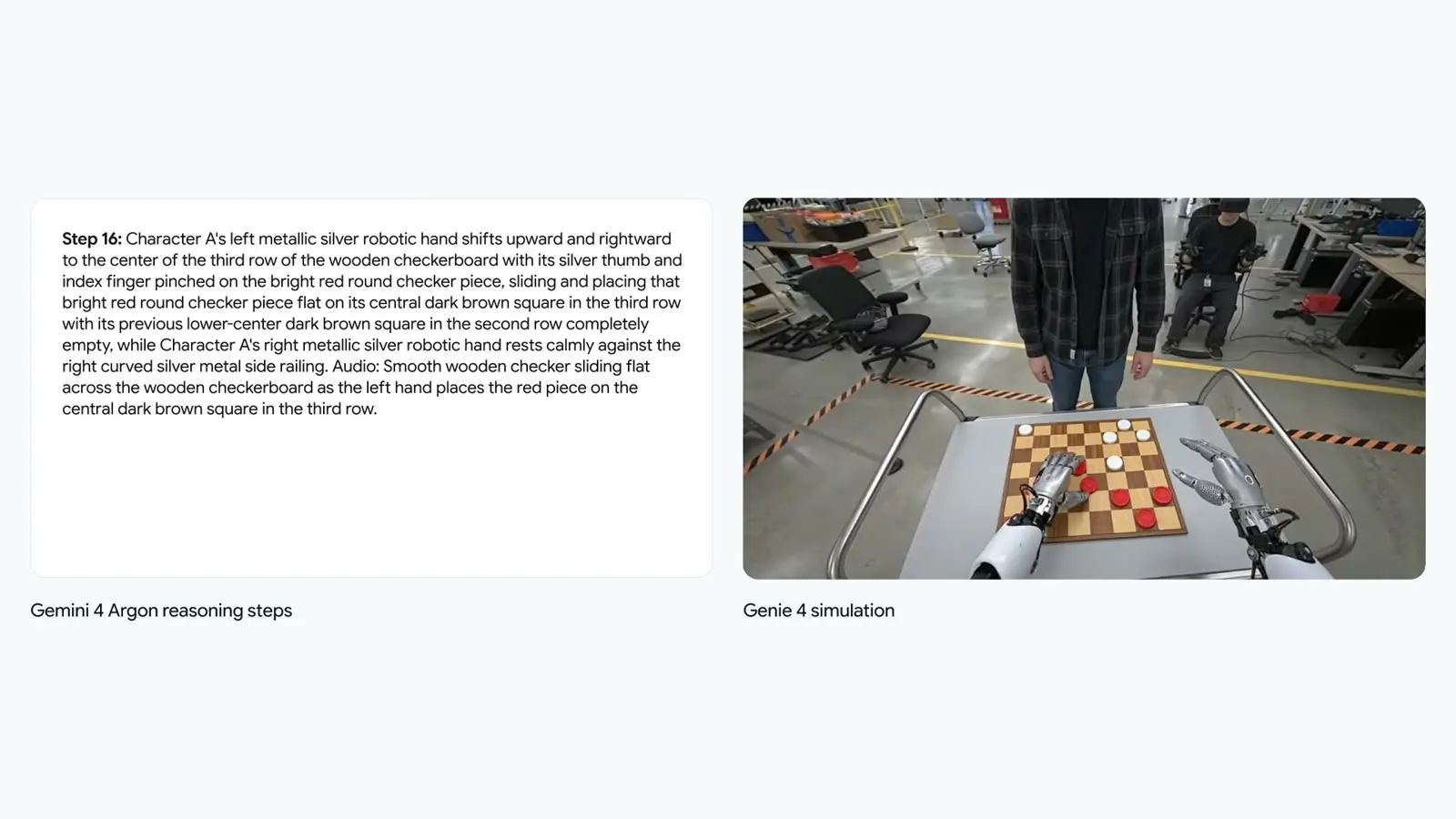
In a separate robotics experiment, Gemini 4 Argon supplies step-by-step instructions while Genie 4 simulates an Apptronik Apollo humanoid playing checkers. This is a generated scenario, rather than a demonstration of a deployed robot's skills.
We previously covered Gemini 4 Argon's arrival in the Gemini app. That assistant rollout is separate from access to this world-model preview.
Google has not specified Genie 4's resolution or frame rate in the announcement. It also warns that objects and visual details can drift during longer sessions, especially after complex edits. Audio accuracy, readable text and spatial consistency remain unfinished. Generated video and audio carry SynthID watermarking.
What this means for you
For filmmakers, a responsive scene could help compare camera angles and dialogue before committing to a shoot. For game designers, it offers a way to explore a concept before building it in an engine. Those are uses Google's testers are exploring.
The useful advance is being able to direct what a scene does and sounds like together. The trade-off is control: a convincing moment can still drift on the next pass. Treat the preview as a place to try ideas; a repeatable scene or dependable training environment needs stronger consistency than the announcement establishes.